Since I've been driving a 40 mile stretch of non-interstate highway repeatedly over the past few days, I've been keeping track of gas prices and am amazed. Not so much at how expensive some stations are (there are big problems in the major domestic supply and refinery region in case certain people -- GEORGE -- haven't bothered to pay attention to the news) but rather the price range.
Yesterday I got gas at a BP for $2.56/gallon and saw prices ranging from $2.53 to $2.99. Today the same BP station was at about $2.79 and the price range on the road was about $2.65 to $3.15. Additionally, the overnight price shock seems to have set off large lines at the cheaper stations (no surprise really).
What I found interesting was that Exxon and Mobil, which generally are the highest priced stations in an area tended toward the lower end today. Several generic stations had some of the highest prices.
My hypothesis (not really developed enough to be a theory) is that the lower priced stations have somehow locked into a lower supply price for at least a period longer than overnight. This can be done by long term contacts or futures market hedging. Brands such as BP and Exxon/Mobil have the additional advantage of being fully integrated companies who are essentially hedged by the fact that they are suppliers to themselves. My guess is that the generic stations with high prices have little choice but to pay overnight prices for their supply and therefore must charge enough to at least break even or choose not to sell gas at all and risk losing all their customers.
What is interesting is that the stations with presumably lower supply cost (especially the brands that are customarily premium priced) are not taking better advantage of their position by marking up their prices under the generous umbrella provided by the competition.
My best example is the main street in my town, where the generic station is priced at $3.15 while the Exxon down the street (within sight) is priced at around $2.75. To top it off (bad pun, I know), the Exxon has much longer opening hours.
Any thoughts?
2005-08-31

Breedo is SUCH a commie
I second Mike's motion.
Good thing you're no longer exposing impressionable young minds to your shocking ignorance, Breedo.
The only other graduate of our fine high school who might possibly believe that tripe is my buddy Jay, and he is also a commie.
Good thing you're no longer exposing impressionable young minds to your shocking ignorance, Breedo.
The only other graduate of our fine high school who might possibly believe that tripe is my buddy Jay, and he is also a commie.
I Think Breedo is a Commie...
I got this from Breedo today:
The first place to go to debunk urban myths like this is Snopes where you will, in fact, find this debunking of the above mentioned stupidity.
I was getting better, now I am especially petulant.
IT HAS BEEN CALCULATED THAT IF NO ONE IN THE UNITED STATES AND CANADA PURCHASED A DROP OF GASOLINE FOR ONE DAY AND ALL AT THE SAME TIME, THE OIL COMPANIES WOULD CHOKE ON THEIR STOCKPILES.
AT THE SAME TIME, IT WOULD HIT THE ENTIRE INDUSTRY WITH A NET LOSS OF OVER 4.6 BILLION DOLLARS WHICH AFFECTS THE BOTTOM LINES OF THE OIL COMPANIES.
THEREFORE SEPTEMBER 1st HAS BEEN FORMALLY DECLARED "STICK IT UP THEIR BEHIND" DAY AND THE PEOPLE OF THESE TWO NATIONS SHOULD NOT BUY A SINGLE DROP OF GASOLINE THAT DAY.
THE ONLY WAY THIS CAN BE DONE IS IF YOU FORWARD THIS E-MAIL TO AS MANY PEOPLE AS YOU CAN AND AS QUICKLY AS YOU CAN TO GET THE WORD OUT.
WAITING ON THE GOVERNMENT TO STEP IN AND CONTROL THE PRICES IS NOT GOING TO HAPPEN. WHAT HAPPENED TO THE REDUCTION AND CONTROL IN PRICES THAT THE ARAB NATIONS PROMISED TWO WEEKS AGO?
REMEMBER ONE THING, NOT ONLY IS THE PRICE OF GASOLINE GOING UP BUT AT THE SAME TIME AIRLINES ARE FORCED TO RAISE THEIR PRICES, TRUCKING COMPANIES ARE FORCED TO RAISE THEIR PRICES, ALL AFFECTING PRICES ON EVERYTHING THAT IS SHIPPED (THINGS LIKE FOOD, CLOTHING, BUILDING MATERIALS, MEDICAL SUPPLIES ETC.). WHO PAYS IN THE END? WE DO!
WE CAN MAKE A DIFFERENCE. IF THEY DO NOT GET THE MESSAGE AFTER ONE DAY, WE WILL DO IT AGAIN AND AGAIN.
SO DO YOUR PART AND SPREAD THE WORD. FORWARD THIS EMAIL TO EVERYONE YOU KNOW. MARK YOUR CALENDARS AND MAKE SEPTEMBER 1ST A DAY THAT THE CITIZENS OF THE UNITED STATES AND CANADA SAY "ENOUGH IS ENOUGH"
First of all, I refuse to do anything with the Canadians. Secondly, this is STUPID, STUPID, STUPID. It ranks up there with:
"The Big-Dig was supposed to get rid of all traffic in Boston"
"We've gotten rid of Saddam, why are we paying so much for gas?"
"Reagan's gonna bring back slavery!" *
The first place to go to debunk urban myths like this is Snopes where you will, in fact, find this debunking of the above mentioned stupidity.
I was getting better, now I am especially petulant.
* Seriously, I remember hearing this in 1980 when I was in third grade at the Joyce Kilmer Elementary School in Trenton, NJ. It was an integrated, inner-city school with 700 kids -- all but 7 of whom were non-white.
I Think Breedo is Dutch...
See numbers 6, 11, and 25.
:)
I know, I shouldn't be so PICK ONE: (captious, irascible, petulant, bellicose, pugnacious, truculent). The problem is that I just can't help it. It makes me feel better if I point out other people's flaws (not saying Breedo has any flaws. He is always right. I see the error in my ways. Now where did I put that tulip?) (See #6)
Who said the following?
"I am not German. I am Dutch."
:)
I know, I shouldn't be so PICK ONE: (captious, irascible, petulant, bellicose, pugnacious, truculent). The problem is that I just can't help it. It makes me feel better if I point out other people's flaws (not saying Breedo has any flaws. He is always right. I see the error in my ways. Now where did I put that tulip?) (See #6)
Who said the following?
"I am not German. I am Dutch."
More changes in guidelines...
I got spammed again. I have since deleted the spam and it is no more. However, what I am going to do now is require all posters to have a blogger ID. Breedo, you're going to need to sign up. (It's free, you cheap bastard!)
2005-08-30
Somedays I just want to get away...
It's been almost 5 months since Manuela and I were in St. Croix for my cousin's wedding -- I can't wait to go back. My uncle has lived down there for 30+ years and I waiting until 2003 to go. The crazy thing is, it was a buddy of mine's wedding that took me there in the first place. Sure, we visited with my uncle, got a "native's" tour of the island, and got to see and experience things tourists never do. I love that place.
Here is what I'd much rather be doing right now:
Here is what I'd much rather be doing right now:

Changes in posting guidelines
Due to the fact that paci.blog is starting to get some spam in the comments field, I decided to turn on "word verification" in order to leave a comment. That means you will be presented with a hard to read graphic with what looks like words and numbers. You will need to retype this word as verification.
Out! Out! Damn Spam!
Out! Out! Damn Spam!
Inside Look: The Apple Product Cycle
A funny read with very good insight into how unsubstantiated rumors float out there and the level to which people try to believe them. I guess one would have to know the Apple side of things to appreciate the quality of this satire. Give it a whirl...
One of my favorite sections:
One of my favorite sections:
Wall Street analysts appear on CNBC to explain that Apple's device will never be able to compete with the onslaught of cheaper Windows-based competitors. Apple's stock plummets. Idiot technology investors experience a brief moment of deja vu before they return to masturbating to photos of Maria Bartiromo.
2005-08-29
Interior Woodwork
The house is just about finished. The contractor still needs his guys to do the aluminum work (gutters, facia, etc) and that should be done this week.
Take a look at some of the finished interior woodwork:
Take a look at some of the finished interior woodwork:

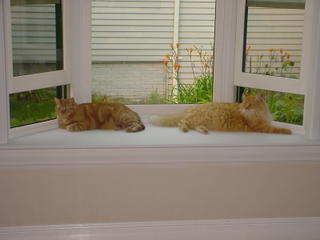
Ollie (l) and Rusty (r) rate the airflow between the two windows.
 Close-up of the rope-molding in the front bay.
 Wider view of the front bay's woodwork.
2005-08-26
History NY Times style
Contained in an article about why trusting in the NJ state government (especially when a dirtball named McGreevey is governor) to carry out a massive building project in conjunction with local officials is never a good idea, is this gem that points out why you can never quite trust the NYT as a paper of record:
In the early 1990's, gangs and crack began to seep into Newark.
Funny, I must have been severly mistaken when I noticed, from casual car and train rides through the city, a teeming river of crack-fueled gang activity as far back as the mid-eighties.
In the early 1990's, gangs and crack began to seep into Newark.
Funny, I must have been severly mistaken when I noticed, from casual car and train rides through the city, a teeming river of crack-fueled gang activity as far back as the mid-eighties.
Microsoft Targeted by Overseas Virus
News? You call that news? Of course MS is being targeted by virus writers! What's so new about that? Well, if you read the article, you'll see that someone who works for MS came back from overseas with a virus. Not a computer virus -- the measles. Who gets the measles these days? Did he miss MMR day at school?
Uh oh, I get it, it's probably a foreigner who brought it in. You know how health conscious they are -- he's probably French.
Uh oh, I get it, it's probably a foreigner who brought it in. You know how health conscious they are -- he's probably French.
2005-08-25
More iBook-related idiocy
Bruce Schneier comments on the case of the Kutztown 13. (I happen to know someone from Kutztown.)
2005-08-24
Word of the day... [Ok, it's really filler]
galactophagist (n)
a milk drinker
George and Molly were determined to raise a brilliant child. "Here you are, my little galactophagist," they said as they gave James his bottle.
a milk drinker
George and Molly were determined to raise a brilliant child. "Here you are, my little galactophagist," they said as they gave James his bottle.
2005-08-20
Confirm him now
The WaPo presents, to my mind, incontrovertible evidence in favor of confirming John Roberts to SCOTUS.
The paper dredged up some of his writings during the Reagan administration including his thoughts on our greatest 20th century president giving a community service award to Michael:
On April 30, 1984, Roberts wrote to oppose a presidential award that was to have been given to Jackson for his efforts against drunk driving. Roberts particularly objected to award wording that described Jackson as an "outstanding example" for American youth.
Roberts wrote: "If one wants the youth of America and the world sashaying around in garish sequined costumes, hair dripping with pomade, body shot full of female hormones to prevent voice change, mono-gloved, well, then, I suppose 'Michael,' as he is affectionately known in the trade, is in fact a good example. Quite apart from the problem of appearing to endorse Jackson's androgynous life style, a Presidential award would be perceived as a shallow effort by the President to share in the constant publicity surrounding Jackson. . . . The whole episode would, in my view, be demeaning to the President."
The paper dredged up some of his writings during the Reagan administration including his thoughts on our greatest 20th century president giving a community service award to Michael:
On April 30, 1984, Roberts wrote to oppose a presidential award that was to have been given to Jackson for his efforts against drunk driving. Roberts particularly objected to award wording that described Jackson as an "outstanding example" for American youth.
Roberts wrote: "If one wants the youth of America and the world sashaying around in garish sequined costumes, hair dripping with pomade, body shot full of female hormones to prevent voice change, mono-gloved, well, then, I suppose 'Michael,' as he is affectionately known in the trade, is in fact a good example. Quite apart from the problem of appearing to endorse Jackson's androgynous life style, a Presidential award would be perceived as a shallow effort by the President to share in the constant publicity surrounding Jackson. . . . The whole episode would, in my view, be demeaning to the President."
2005-08-19
Toaster-Pastry Contest Entry
Nothing happens in my life, so I'm reduced to raiding other blogs — but at least I pick the good stuff, like this Pillsbury contest entry from Hubris.
WAHHHHH! I didn't get an iPod
This article in the NY Post covers the trials and tribulations of a woman who was paid $1500 to appear in an iPod ad. That's $1,500 for 3 hours worth of work. While I don't think that she is really crying that she didn't get a free iPod OR that she cannot afford one, the author - Julie Moult - sure as hell tries to spin the article that way.
What? iPods cost more than $1,500? Damn, I got a good deal on my iPod Photo! Oh wait, two paragraphs later we get this quote from the dancer, Mandy Coulton:
That's better. She sounds downright reasonable. She wants one, but cannot afford one because she has other day-to-day expenses like housing and transportation. She says that she's not bitter and I tend to believe her.
The article goes on to say that she lives with her [not very successful if you can't afford an iPod] venture-capitalist husband and she works as a nanny to keep the pennies coming in as her dance jobs are fairly sporadic.
l8r
She was paid a flat fee of $1,500 for the shoot - a tiny fraction of the billions Apple has reaped from the sale of its sleek portable player. But Coulton - posing here with one of her ads - says it still wasn't enough to buy one of the must-have gadgets.
What? iPods cost more than $1,500? Damn, I got a good deal on my iPod Photo! Oh wait, two paragraphs later we get this quote from the dancer, Mandy Coulton:
"I would like one - but $400 for an iPod is too much for me at the moment. I can't justify spending that much money when I have day-to-day stuff to pay for, like the car and rent."
That's better. She sounds downright reasonable. She wants one, but cannot afford one because she has other day-to-day expenses like housing and transportation. She says that she's not bitter and I tend to believe her.
The article goes on to say that she lives with her [not very successful if you can't afford an iPod] venture-capitalist husband and she works as a nanny to keep the pennies coming in as her dance jobs are fairly sporadic.
l8r
2005-08-18
More house photos
As you can see, the house is coming along nicely. In fact, the contractors finished all of the interior woodwork today. That means Manuela and I can start priming and painting the woodwork. We're once step close to putting our house back together!


(OK, Manuela will be doing most of the painting. My job is to supervise and take pictures for the record.)

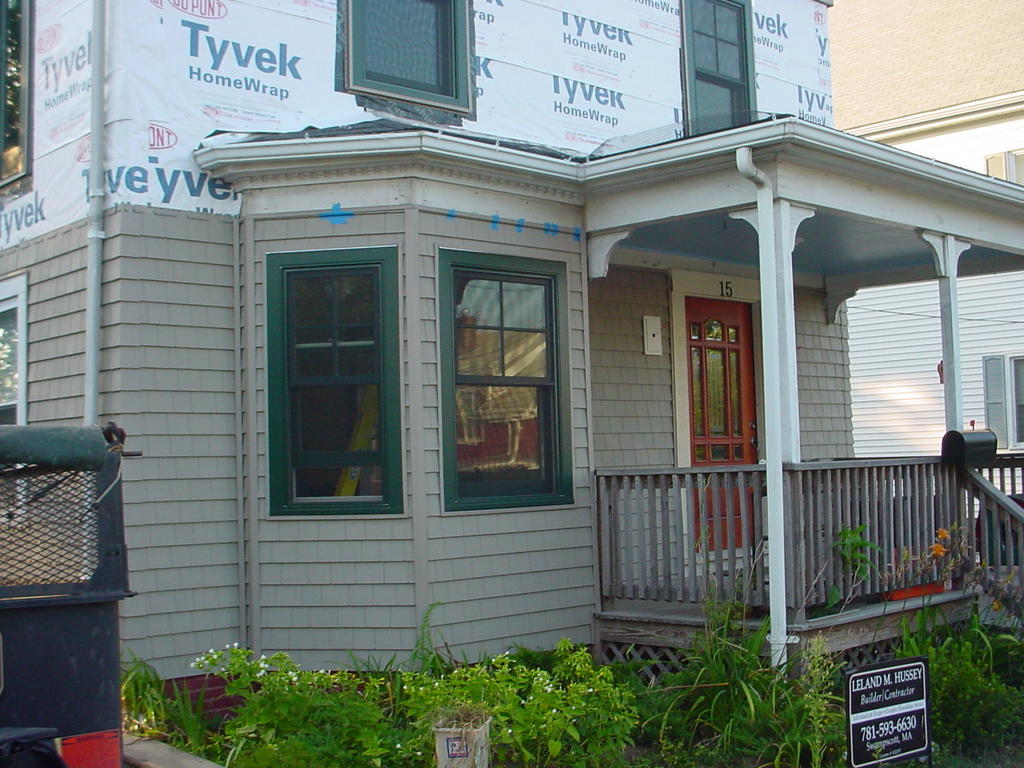

(OK, Manuela will be doing most of the painting. My job is to supervise and take pictures for the record.)
2005-08-17
iBook Stampede
Southern gentility went head-to-head with thoughtless government largesse in Richmond, VA, recently — and got beaten down with a folding chair.
($50? What were they thinking? Have they never heard of eBay (which, incidentally, has been stampede-free since 2000)?)
($50? What were they thinking? Have they never heard of eBay (which, incidentally, has been stampede-free since 2000)?)
Congratulations Dave!
I just got news yesterday that a good friend of mine, we'll call him Dave, landed a job as a Field Service Technician for a bank in NC. He'll be driving all over the state supporting branches of the bank -- installing hardware, troubleshooting PC issues, kicking ATMs, you get the picture.
Dave has been out of work for the better part of a year since he left teaching. He's put his nose to the grind stone and went back to the books to learn so he could change careers.
Hats off to you Dave and best of luck!
(now call me you bonehead)
Dave has been out of work for the better part of a year since he left teaching. He's put his nose to the grind stone and went back to the books to learn so he could change careers.
Hats off to you Dave and best of luck!
(now call me you bonehead)
2005-08-16
Smart Idiot
Take a look at the idiocy a little knowledge can bring — specifically, a little specialized knowledge of computing combined with a remarkable ignorance of economics: Robotic Nation.
I especially liked this sentence:
Keep this fact in mind: the workplace of today is not really that much different from the workplace of 100 years ago.
Actually, it is different — because it's not a farm. Gosh, what happened to all those farmers we don't need anymore because of mechanization? Are they standing around in unemployment lines? Arrrrgh.
PS: Yes, I know this is Breedo bait.
2005-08-15
Flashback (no pun intended)
This is one of my favorite time wasters on the Internet. I can still sit and watch this over and over and over again. If any of you know where to find the "Hat Dance" flash video, please post it in the comments section.
"all your base are belong to us"
"all your base are belong to us"
2005-08-14
2005-08-11
2005-08-10
Jump the Snark
My geek world is political news and commentary and the personalities behind them. While my brothers nurse their tech hobbies at geek gatherings, I attend political conventions and media personality appearances. Here's a good one I saw today.
"Wolf, you could be on the FBI's 10 most-wanted list, host a nightly program on MSNBC and be perfectly safe. No one would have any idea where you were. Ask Tucker Carlson.'" -- Jack Cafferty on CNN's "The Situation Room"
"Wolf, you could be on the FBI's 10 most-wanted list, host a nightly program on MSNBC and be perfectly safe. No one would have any idea where you were. Ask Tucker Carlson.'" -- Jack Cafferty on CNN's "The Situation Room"
Some before/after pics of the house...
Here is the front of the house before the new windows...

Here is the front with the new windows. Notice how much wider the small window is.

Here is an exterior view of the old window bank on the back right side of the house.

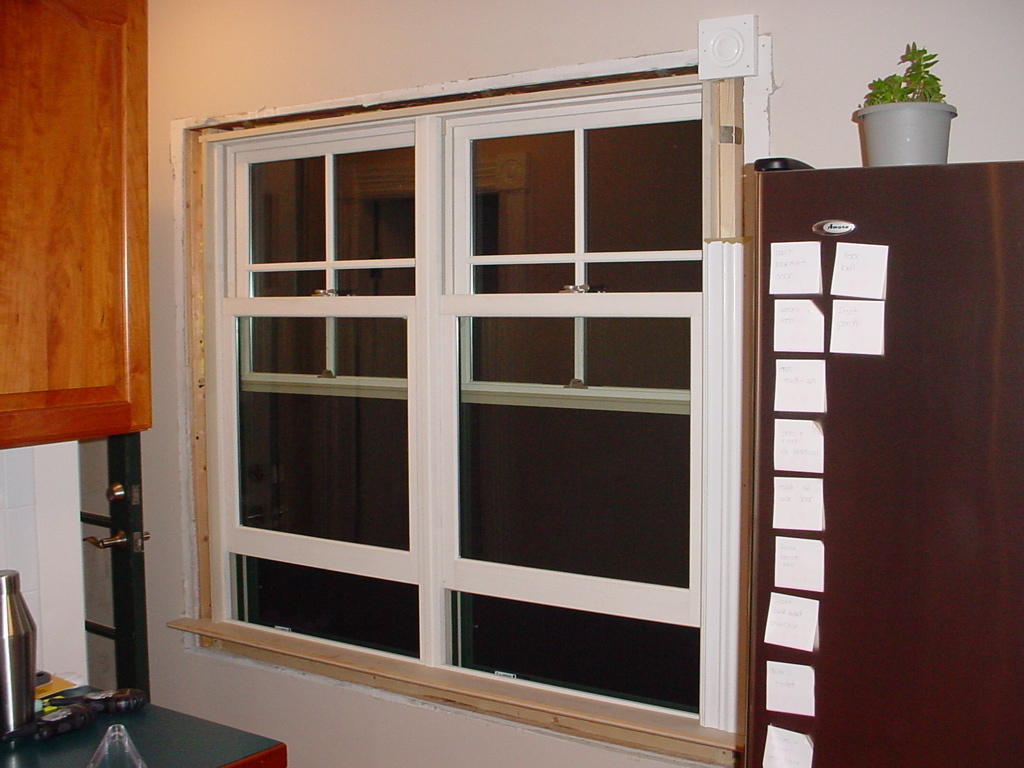
Here is the interior view of the new windows.

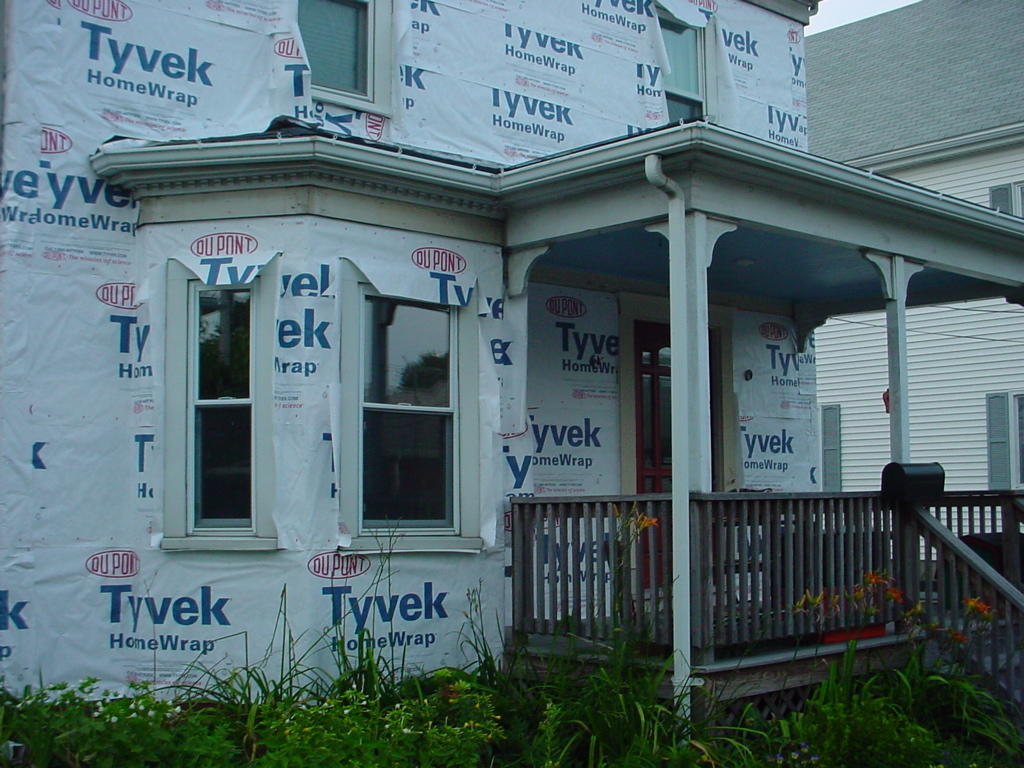
Here is the front with the new windows. Notice how much wider the small window is.

Here is an exterior view of the old window bank on the back right side of the house.

Here is the interior view of the new windows.
I'm Rick James...
Ok, not really. Here is a pretty good article on Daring Fireball that systematically picks apart another article [boingboing] which was written based on information from this Slashdot article which was based on information from this blurb which came from information a bunch of NDA-burning developers who have their hands on the x86 version of MacOS X.
My favorite blurb:
At least I found it funny. Does that make me a geek? So what if I am. I did still find the above clip from the article to be pretty funny.
My favorite blurb:
"I travel in the kinds of circles where many people use GNU/Linux on their computers — and not only use it, but actually call it GNU/Linux instead of just “Linux,” in the fashion called for by Richard Stallman. Some of these people give me grief over the fact that I use Mac OS X instead of GNU/Linux on my Powerbook, because the MacOS is proprietary."
There is a word for these people. That word is asshole. No, wait, zealot. OK, there are two words for these people.
At least I found it funny. Does that make me a geek? So what if I am. I did still find the above clip from the article to be pretty funny.
Home renovations are amazing...
Sorry, no pictures today -- I just didn't have time to take them and download them to iPhoto, export them, and upload them to blogger. I'll have more for you tonight when I get home.
The contractors removed a bank of three windows in the back hall and replaced it with two new windows that fill the space. They also installed a window in the downstairs bathroom. It will be great to have natural light and fresh air in there.
That's all for now, no links, no photos.
The contractors removed a bank of three windows in the back hall and replaced it with two new windows that fill the space. They also installed a window in the downstairs bathroom. It will be great to have natural light and fresh air in there.
That's all for now, no links, no photos.
2005-08-08
It's coming along...
I was in NC for the past few days hanging out with a number of fraternity brothers for our anual Outer Banks Fishing Trip*, so I haven't been able to update you (whoever you are) on the progress on the house. Since a picture is worth 1,000 or so words, I'll let them speak for themselves.


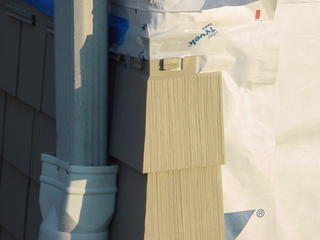
* There is absolutely NO fishing at the OBFT. Who the hell is going to go ON VACATION just to WAKE UP AT 3 AM and go fishing? Thought so.
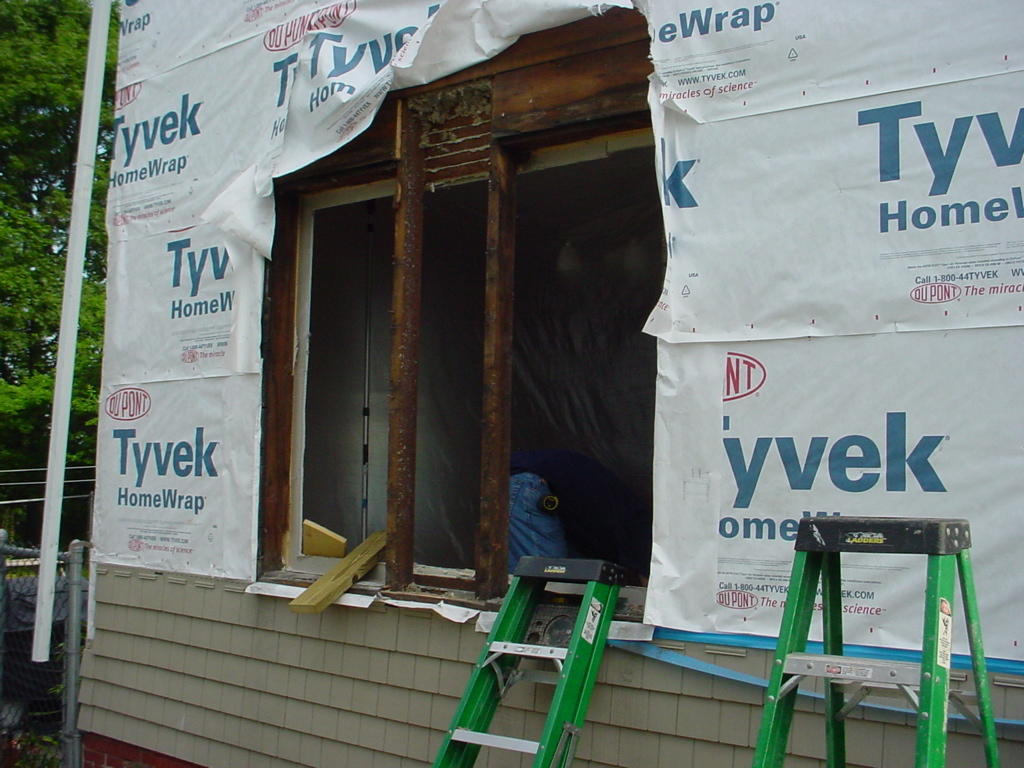


* There is absolutely NO fishing at the OBFT. Who the hell is going to go ON VACATION just to WAKE UP AT 3 AM and go fishing? Thought so.
2005-08-05
2005-08-03
Wisdom of Our Blogfathers (II)
Another of my blog forebears is James Lileks of Minnesota who does a great eclectic blog encompassing political commentary, family anecdotes, and matchbook collections. Yes, that last one is no misprint.
Lileks is also a syndicated columnist with a withering sense of sarcasm. See for yourself in his latest offering Live From New York: It's Ambassador John Bolton.
Now that John Bolton has been installed as United Nations ambassador -- by the time-honored recess appointment or the power-crazed overreach of King Emperor Bush Fuhrer, depending on your point of view -- one can only wonder how he'll do. Here's a hypothetical workday. (Note that he's made it out of Washington without some senators throwing themselves on the train tracks to keep him from leaving. Or, rather, having aides throw themselves on the tracks. Make that interns. Aides might say things under anesthesia.)
Read the rest.
Lileks is also a syndicated columnist with a withering sense of sarcasm. See for yourself in his latest offering Live From New York: It's Ambassador John Bolton.
Now that John Bolton has been installed as United Nations ambassador -- by the time-honored recess appointment or the power-crazed overreach of King Emperor Bush Fuhrer, depending on your point of view -- one can only wonder how he'll do. Here's a hypothetical workday. (Note that he's made it out of Washington without some senators throwing themselves on the train tracks to keep him from leaving. Or, rather, having aides throw themselves on the tracks. Make that interns. Aides might say things under anesthesia.)
Read the rest.
There's something rotten in Swampscott...
No, it's not my hamper. No, it's not me. It's one corner of my house. Our contractor showed us where the whole (thankfully) small corner of the house is rotten. It's needs fixing, fixing we must do. No biggie, says he.

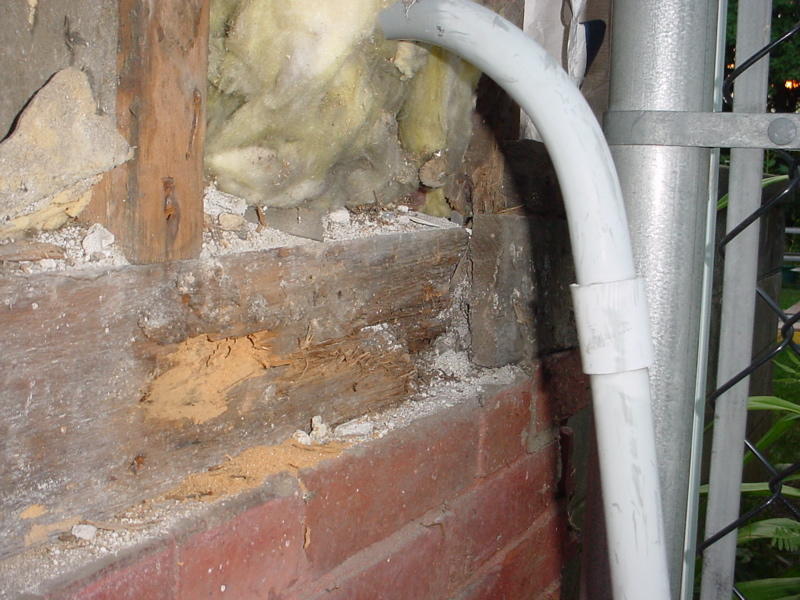
I love my Mac, but this is a little extreme...
Self-destructive behavior?
Look at the tatoo on the guy's neck. Ok, just look at the girl...
I challenge you to find a pic of someone who has Intel-Inside etched on their arm or a CTRL-ALT-DEL tattoo on their neck. I blame this on the iPod...
Look at the tatoo on the guy's neck. Ok, just look at the girl...
I challenge you to find a pic of someone who has Intel-Inside etched on their arm or a CTRL-ALT-DEL tattoo on their neck. I blame this on the iPod...
2005-08-02
Why Tyvek isn't meant to be used as siding
I found out last night why Tyvek doesn't make a good siding material. In a windstorm, the flapping sound will drive you mad. In a heavy downpour you will swear that hailstones the size of softballs are hitting your house.
No picture today, yet, but the house is 100% wrapped in Tyvek. The contractors have been replacing some rotted boards at the sill plate -- hopefully this will block the drafts that leave my house at a nippy 55 F in the coldest of winter. During the first storm of last winter, my girlfriend noticed that snow was blowing into the basement through a gap in the front of the house. It's always been a bit cooler in that spot, but actually having snow blow in AND accumulate was the primary impetus for this project (ok, the fact that the siding had turned pink was the primary motivator, but accumulating snow in the basement is a close second.)
No picture today, yet, but the house is 100% wrapped in Tyvek. The contractors have been replacing some rotted boards at the sill plate -- hopefully this will block the drafts that leave my house at a nippy 55 F in the coldest of winter. During the first storm of last winter, my girlfriend noticed that snow was blowing into the basement through a gap in the front of the house. It's always been a bit cooler in that spot, but actually having snow blow in AND accumulate was the primary impetus for this project (ok, the fact that the siding had turned pink was the primary motivator, but accumulating snow in the basement is a close second.)
Subscribe to:
Posts (Atom)